
CYBERSECURITY 2026
REAL STORIES FROM REAL PEOPLE
How one ordinary mistake wipes out people's life savings in 5 minutes: 3 real stories and how to protect yourself.
⚠️ 84% of PC infections happen when downloading ordinary files and drivers. Find out how to protect your device from ransomware scripts.

T. Caldwell
"The most dangerous malware out there isn't buried in the dark web - it's on the first page of your search"
I went looking for a driver and lost everything
I've always thought of myself as a fairly savvy user. I know how to spot a phishing email, I don't click sketchy links on social media, and I don't believe messages telling me I've suddenly won a million dollars. But a couple of months ago I fell for a trap set so cleverly that I still feel embarrassed talking about it.
I had a work task I needed to finish urgently on a weekend. I was missing just one thing - a printer driver. There was no time to hunt down official licences or deal with payments. So I just opened Google, typed in 'free download' and clicked the very first link. It even had an 'Ad' label on it. The site looked flawless: official colours, reviews, a green download button. I downloaded a file called 'official_installer.exe'.
I ran the file and got the usual installation window. The progress bar shot up to 100%, the window closed - and the program never appeared. I figured the installer was broken, gave up on it and went looking for an alternative. Meanwhile, the banking trojan I'd just downloaded was already hard at work. What was hiding behind the utility I needed turned out to be an aggressive infostealer. It sat quietly in the background, siphoning off every saved password, cookie and browser session I had. Standard browsers simply cannot spot these modified scripts, which is why having active background malware protection running on your PC is essential to catch silent intruders before they steal your credentials.

Forty-eight hours later, the nightmare began. In the middle of the night my phone started blowing up with bank alerts - someone was draining my card in $50 transactions. When I tried to log into my email, the password had already been changed. With my cookies in hand, the hackers had simply 'cloned' my browser and walked straight past two-factor authentication. It took me weeks of phone calls to banks, cancelled cards and a full system reinstall - wiping out every family archive I had - to get control of my life back.
We often think that basic computer literacy is enough to keep us safe. We trust our ability to spot a scam, believing that if we avoid the dark web and obvious spam, we are untouchable. But my experience proves that confidence can be your biggest vulnerability when you're rushing to meet a deadline. Cybercriminals don't need you to be clueless; they just need you to drop your guard for one single second in a moment of stress. To prevent a single split-second mistake from wiping out your data, download a trusted antivirus scanner today or compare top-rated PC defense tools to secure your computer automatically.
Expert Note: Standard browsers miss hidden script installers. A real-time antivirus blocks fake driver downloads before execution.
Recommended protection for fake downloads below


C. Whitfield
"A shared family computer is like public transport. You never know who brought what into your home on it."
What happens when the older generation gets left alone with your PC
They say nothing tests your security setup quite like leaving an older relative alone with your open browser. We joke about our parents not knowing their way around technology, but when it comes to real cyber threats, it stops being funny. I learned the hard way that a loved one's trusting nature can end up costing a fortune.
My father came to stay with us for the weekend. That morning I was working on my laptop - the one with all my projects, my crypto exchange logins and my work documents on it. I decided to take a break and went to the kitchen to make some tea. The laptop was left unlocked. My dad got bored and decided to read the news. He clicked on some flashy ad teaser with a screaming headline about health, and it dumped him on a completely different site.
I come back with the tea and find this scene: my father sitting there wide-eyed with the phone pressed to his ear, and a huge red-and-black window flashing on my screen - 'SYSTEM LOCKED. VIRUS DETECTED.' Terrified that he'd broken my expensive machine, he'd spotted a 'free Microsoft emergency helpline' on the screen and called it right away. A polite 'engineer' picked up and immediately asked him to read out the code from AnyDesk, a remote access program. Scammers rely on flashy red windows to panic users into taking rash actions. Without a real-time web protection shield installed, even experienced users can fall for fake system alerts that mimic legitimate security notices.
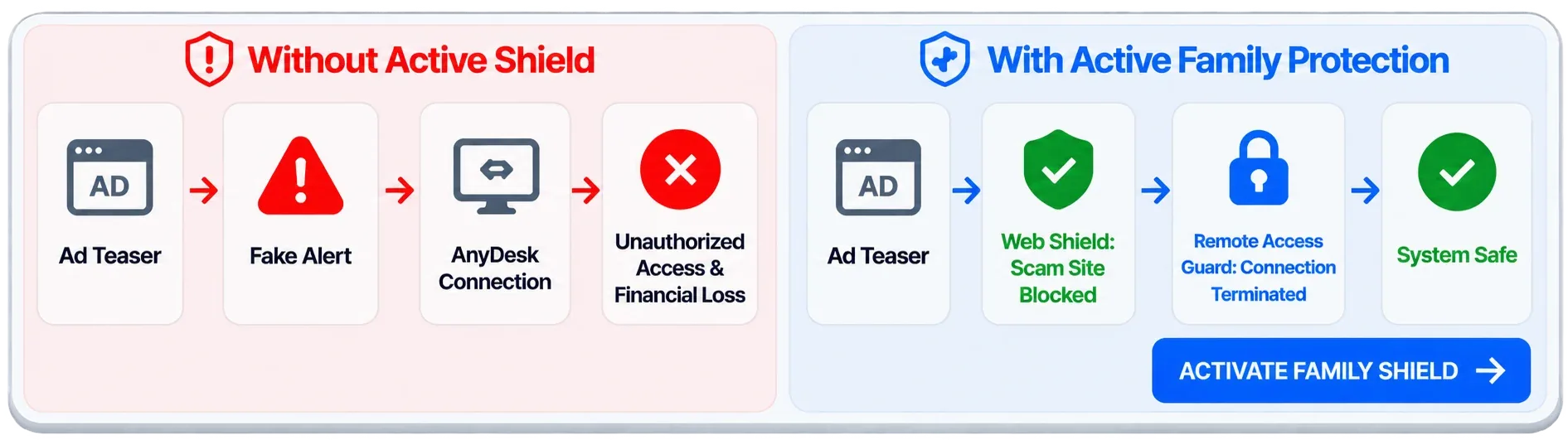
I lunged for the laptop and yanked out the internet cable, but it was too late. In the two minutes I'd been gone, the hackers had already gained access to the desktop and managed to run a script that pulled the files from my crypto wallet. The result: a year's salary vanished from my account. My father spent the rest of the day on sedatives, apologising over and over, eaten up with guilt. And I realised that panic is a scammer's main weapon - one that no amount of telling people to be careful will ever defend against.
If your family computer is shared, the smartest move is to install multi-device security software or choose a comprehensive family protection plan to prevent remote access scams automatically.
It’s easy to blame our parents for not understanding how the modern internet works, but scammers specifically design these traps to bypass logic and trigger pure panic. They prey on the older generation’s respect for authority - like a polite "support engineer" - and their deep fear of breaking an expensive device. You can't train every family member to be a cybersecurity expert overnight, and you certainly can't stand behind them to watch their every click.
Expert Note: Panic scams target trust, not technical flaws. Anti-phishing guard automatically cuts off fake pop-ups and AnyDesk access.
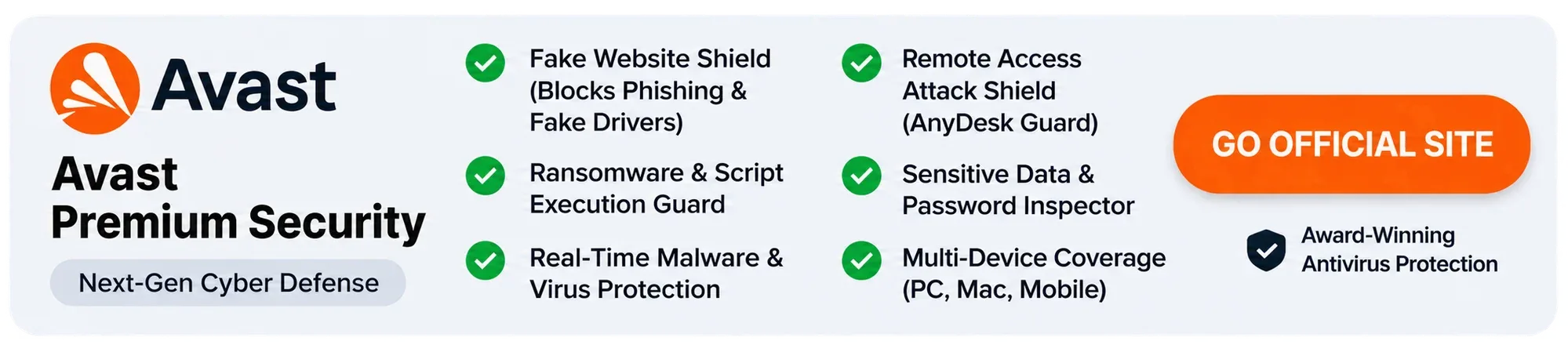
Explore family PC protection below

J. Brooks
"Sometimes the report you've been waiting for is the one that takes everything from you. And I'm not talking about your salary."
How a friend of mine nearly destroyed his business
You know, I always thought corporate hacks looked like they do in the movies: green code on a black screen, tense programmers, passwords being brute-forced. The reality turned out to be far more mundane - and all the more frightening for it. A good friend of mine, Ethan, is an HR director at an international bank. It's a stressful job: constant deadlines, hundreds of emails a day, endless pressure from above. Under conditions like that, your brain simply stops critically assessing every incoming request. You're running on autopilot.
That day was the end of the quarter and the reports were on fire. Late in the afternoon, an email lands in Ethan's inbox. The formatting is perfect, the corporate signature matches, even the tone sounds familiar. The subject line reads: 'Urgent - final revisions, please review.' Inside was an attachment: 'report_final_2024.pdf.zip'. Ethan was certain this was the file he'd been waiting for from the contractors since that morning. Without a second's hesitation, he double-clicked it.
No document opened. Instead, a black command line window flashed up for a split second and vanished. Ethan sighed, figured the file had got corrupted in transit, and went to pour himself a coffee. What he didn't know was that at that exact moment a sophisticated PowerShell script had launched on his computer. It quietly switched off Windows Defender, connected to a remote server in another country and downloaded a password stealer. Built-in OS tools are often the first target of sophisticated attacks, which is why relying on advanced anti-ransomware software with self-defense capabilities is mandatory for protecting sensitive files. Over the next ten minutes, the virus crept silently across the company's local network, infecting neighbouring machines and harvesting database credentials.
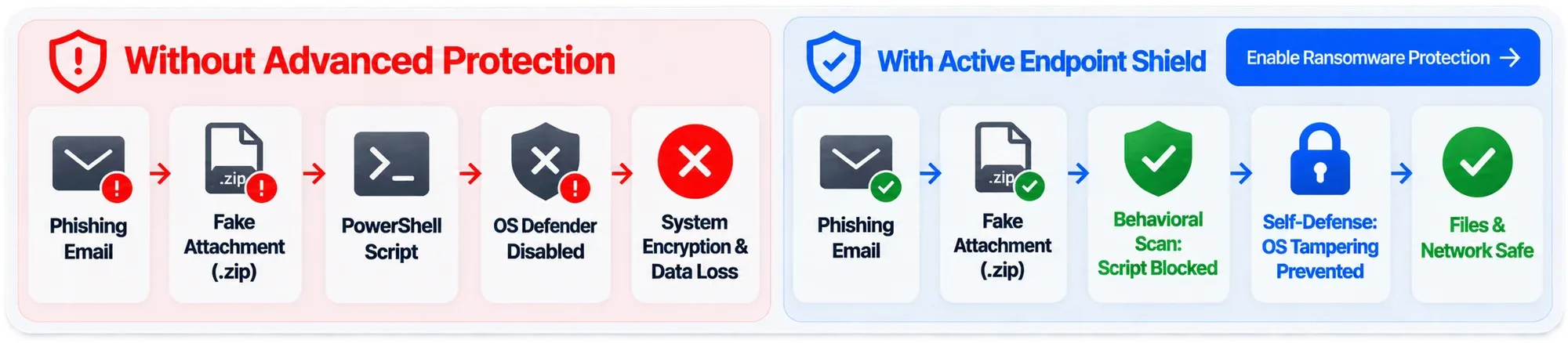
The next morning, disaster struck. A sinister red ransom message appeared on every desktop in the department. The entire group's operations were paralysed. Financial reports, client databases - everything was encrypted. Security quickly traced the source of the infection. My friend had to sit through humiliating interviews, a polygraph test and the threat of criminal charges to prove he hadn't been working with the hackers. In the end the company lost an enormous amount of money in downtime, and Ethan nearly lost his career over a single click.
In the corporate world, we rely on established workflows and trust our regular contacts, which creates a dangerous false sense of security. We assume enterprise-level threats require complex hacking or insider sabotage, but in reality, all it takes is one disguised file and a cleverly spoofed email address. When you process dozens of documents a day, your attention naturally slips. Hackers know this routine inside out, patiently waiting for that inevitable moment of human error. To ensure a single accidental click doesn't paralyze your system, make sure to run a full malware scan today or activate active endpoint protection before a security breach occurs.
Expert Note: Ransomware bypasses basic OS tools in seconds. Behavioral defense detects and kills hidden PowerShell scripts before encryption.
Top-rated ransomware defense below